
ICVSSD 2026 : Vibration for Better Machines, Smarter Systems
The rapid advancement of artificial intelligence (AI) and big data analytics is transforming vibration and sound analysis. Today, vibration data can be integrated directly into machine performance monitoring, diagnostics, and optimization. This enables engineers to design machines that are more precise, efficient, reliable, and durable. In the past, vibration and acoustic measurement systems were often costly and limited to specialized laboratories. At ICVSSD 2026, we continue our tradition of introducing innovative yet cost-effective technologies to promote wider adoption of vibration measurement and analysis across industry and academia.
The theme for ICVSSD 2026 reflects the evolution of vibration analysis into a more integrated and intelligent discipline. Modern engineering practice now combines vibration, acoustics, noise control, and machine condition monitoring with emerging technologies such as AI, IoT, digital twins, and smart sensing systems. “Better machines” refers to improving performance and extending service life through vibration-based diagnostics and optimization. A highlight this year is a presentation on a dynamic oscillating cutting system for oil palm harvesters, which significantly reduces cutting force compared to conventional static cutting methods. For battery-powered harvesting equipment, this increased efficiency means more trees can be harvested between charges, improving productivity and sustainability.
“Smarter systems” expands the focus beyond individual machines to networked, adaptive, and autonomous systems capable of self-monitoring, learning, and optimizing their own performance. Such systems enhance operational efficiency while contributing to environmental responsibility and long-term industrial resilience.
Special Workshop 2026:
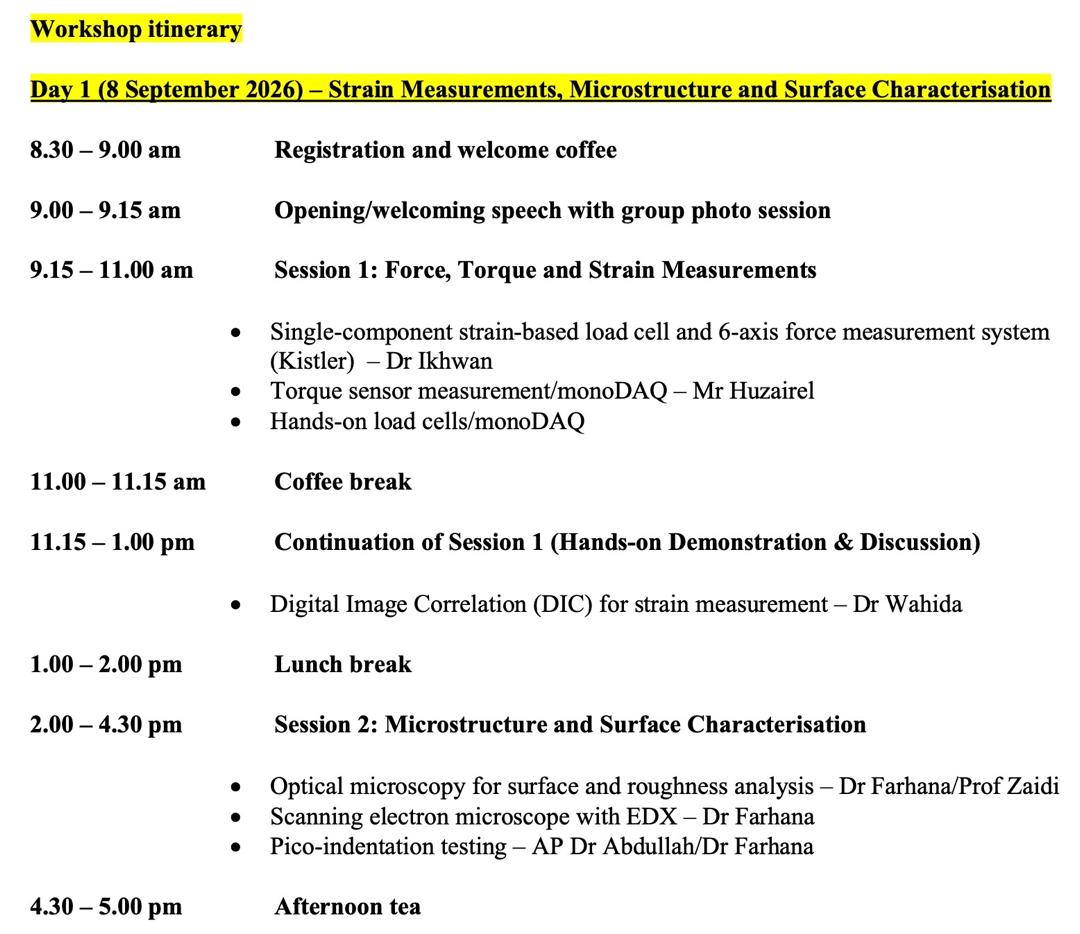
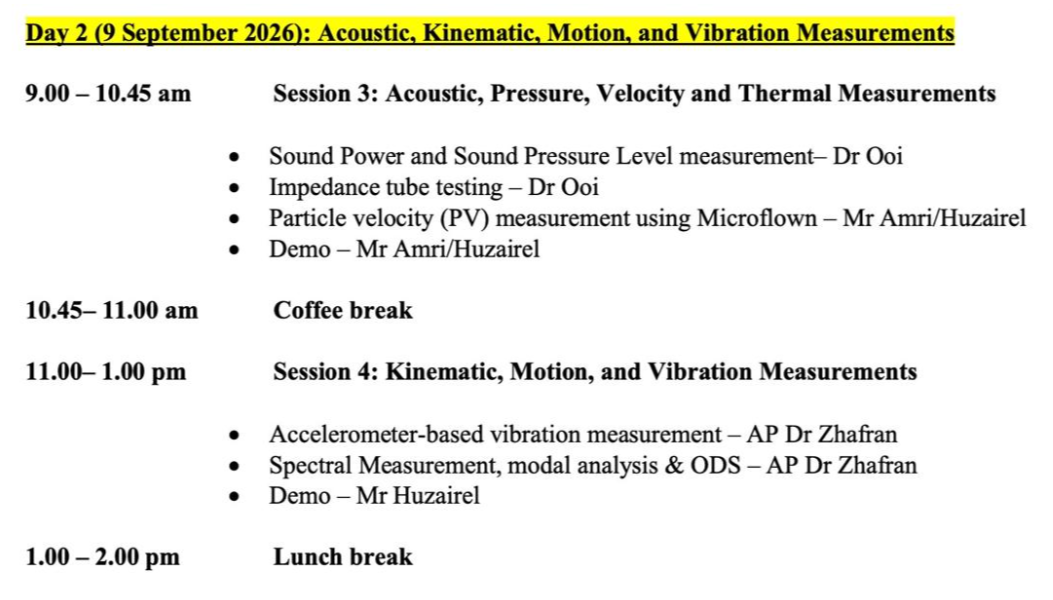
To complement the conference, we are organizing a two-day Workshop on Practical Measurement and Testing for Mechanical, Acoustic, and Material Systems. Advanced engineering research and industrial applications depend heavily on accurate measurement and analysis of physical phenomena, including force, torque, motion, vibration, sound, temperature, pressure, and material microstructure. Proper selection, calibration, and application of measurement devices are essential to ensure reliable experimental data and meaningful interpretation.
This workshop provides hands-on exposure to a wide range of experimental techniques commonly used in mechanical engineering, vibration and sound analysis, materials characterization, and structural evaluation. Participants will work directly with laboratory instruments, sensors, and data acquisition systems under the guidance of experienced instructors and technical experts.
Session One introduces the measurement of mechanical loads and deformation. Participants will explore force and torque sensing using strain-based load cells, multi-axis force platforms, and torque sensors. Non-contact strain measurement using Digital Image Correlation (DIC) will also be demonstrated to visualize full-field deformation. Emphasis is placed on calibration, measurement accuracy, signal interpretation, and common sources of error.
Session Two focuses on motion and vibration measurement in dynamic systems. Topics include accelerometer-based vibration measurement, particle velocity sensing, and non-contact laser displacement techniques. Live demonstrations will highlight proper sensor mounting, frequency response considerations, and time- and frequency-domain analysis for evaluating structural and machine performance.
Session Three covers sound, pressure, and temperature measurement. Participants will learn microphone calibration, sound pressure and sound power measurements, acoustic material testing using an impedance tube, dynamic pressure sensing, thermocouple-based temperature measurement, and infrared thermal imaging. Measurement standards and data reliability will be emphasized.
Session Four examines material surface and microstructural analysis. Techniques include optical microscopy and indentation-based testing such as nano-indentation and pico-indentation to determine hardness, elastic modulus, and local mechanical properties. The session highlights the relationship between microstructure and macroscopic material behavior.
We warmly welcome research contributions that advance vibration, acoustics, noise control, and condition monitoring technologies. Please submit your papers to ICVSSD 2026. I look forward to welcoming you to Penang, Malaysia, in 2026.
Yours sincerely,
Professor Dr. Zaidi Mohd Ripin
Chairman, ICVSSD 2026
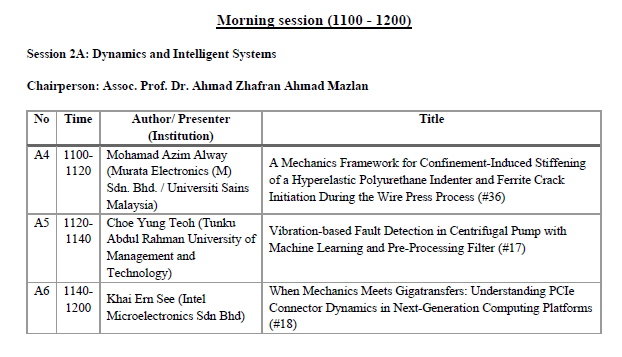
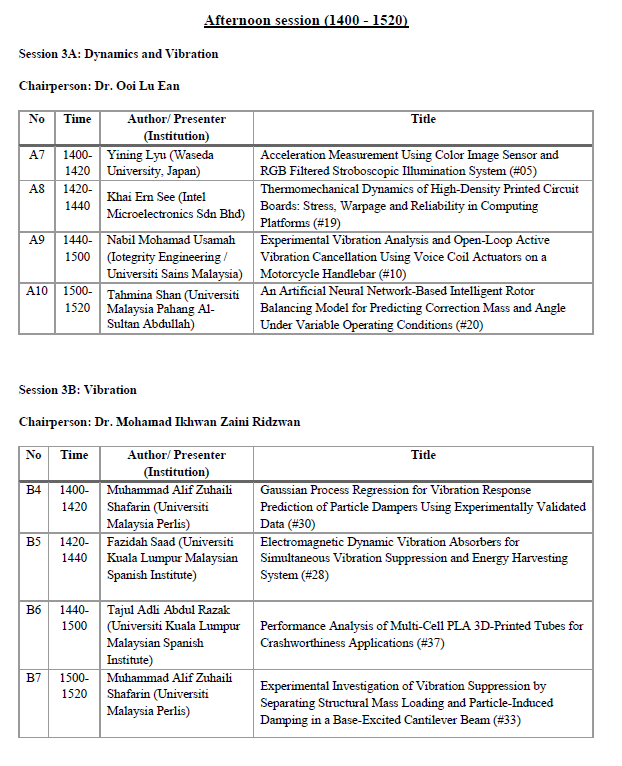
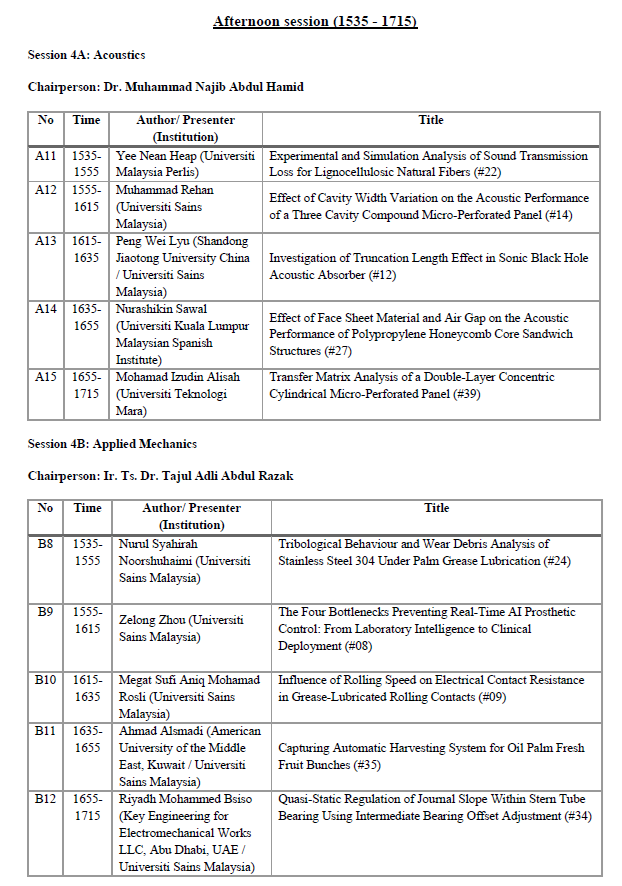
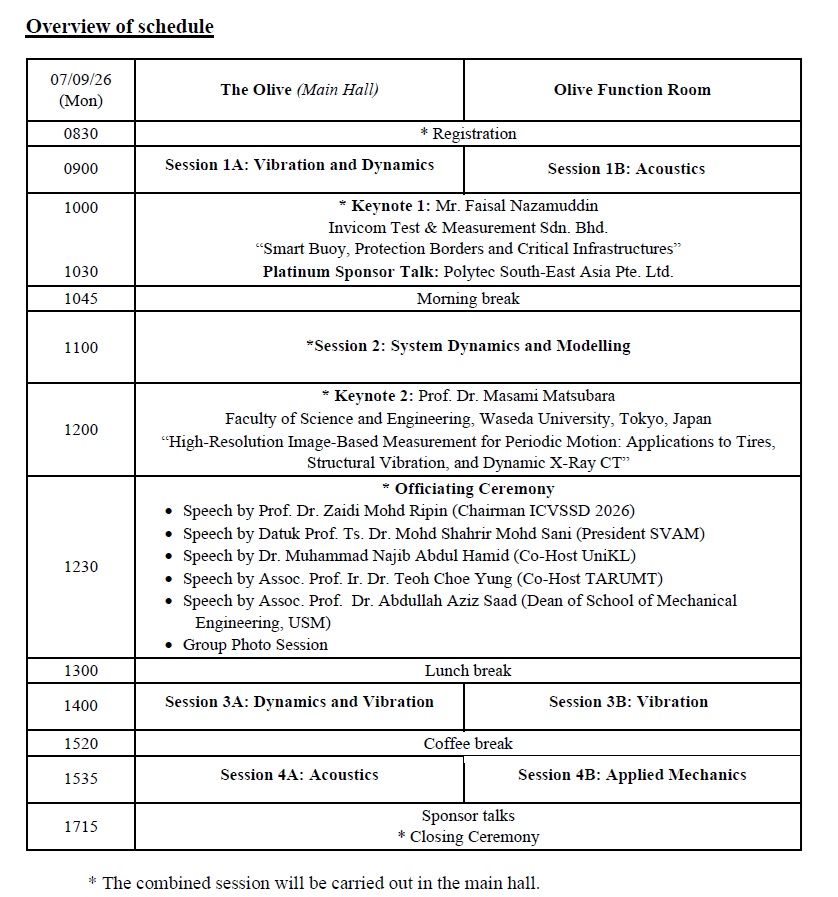
Keynote 1 (Academic)
Prof. Dr. Masami Matsubara
Faculty of Science and Engineering
Waseda University, Tokyo, Japan

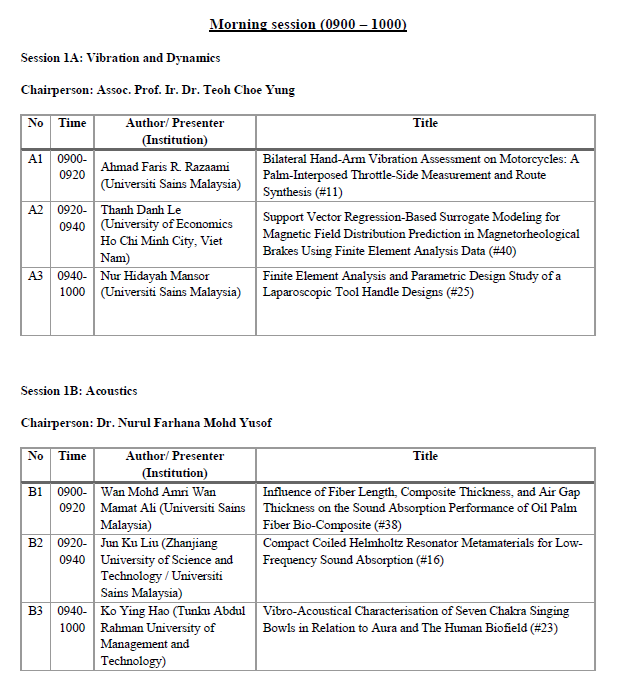
High-Resolution Image-Based Measurement for Periodic Motion: Applications to Tires, Structural Vibration, and Dynamic X-Ray CT
Abstract
This presentation introduces phase-locked imaging for high-speed, high-resolution measurement of periodic phenomena. Applications to rolling tire tread deformation, micro-vibration measurement, and synchrotron X-ray CT of dynamically deformed rubber and composite materials are presented, demonstrating its potential as a multi-scale visualization technique for engineering mechanics.
Keynote 2 (Industry)
Mr. Faisal Nazamuddin
Invicom Test & Measurement Sdn. Bhd.

Smart Buoy, Protection Borders and Critical Infrastructures
Abstract
Increasing illegal activities in the busy waterways specifically human trafficking, smuggling and piracy demand innovative surveillance solutions. Vulnerability of critical underwater infrastructure—including subsea communication cables carrying global internet traffic, offshore energy installations, pipelines, and port facilities—need strategic defence mechanisms. Such cross border illicit trades and infrastructure protection often make traditional monitoring methods remain prohibitively expensive, limited in coverage, and ineffective at detecting small wooden boats, subtle threats from both deliberate sabotage (underwater explosives, cable cutting, anchor drops) and accidental damage (fishing activities, construction work). The Smart Buoy system addresses these challenges through an AI-powered continuous acoustic monitoring solution. The system employs a network of high-sensitivity microphones (hydrophones) that capture underwater and aerial sound signatures, processed through advanced machine learning algorithms for real-time threat detection and pattern recognition. The system distinguishes between normal and suspicious activities through self-improving detection accuracy, offering 24/7 surveillance with instant threat alerts. Distributed and networked buoy system can triangulate events to pinpoint exact positions while operating independently with self-contained electronics. Strategic deployment ensures optimal coverage. Implementation follows a phased approach from proof-of-concept trials through full scale deployment, with flexible software integration and disguised units designed as guiding beacons. The system offers significant advantages over existing surveillance methods, including reduced operational costs, low maintenance requirements, and enhanced coverage capabilities through grid deployment for calculating direction, speed, and depth of potential threats. This solution addresses critical gaps in national security, coastal infrastructure protection, particularly complementing existing naval and coastal agency surveillance capabilities.
- You are here:
-
Home

- ICVSSD 2026

